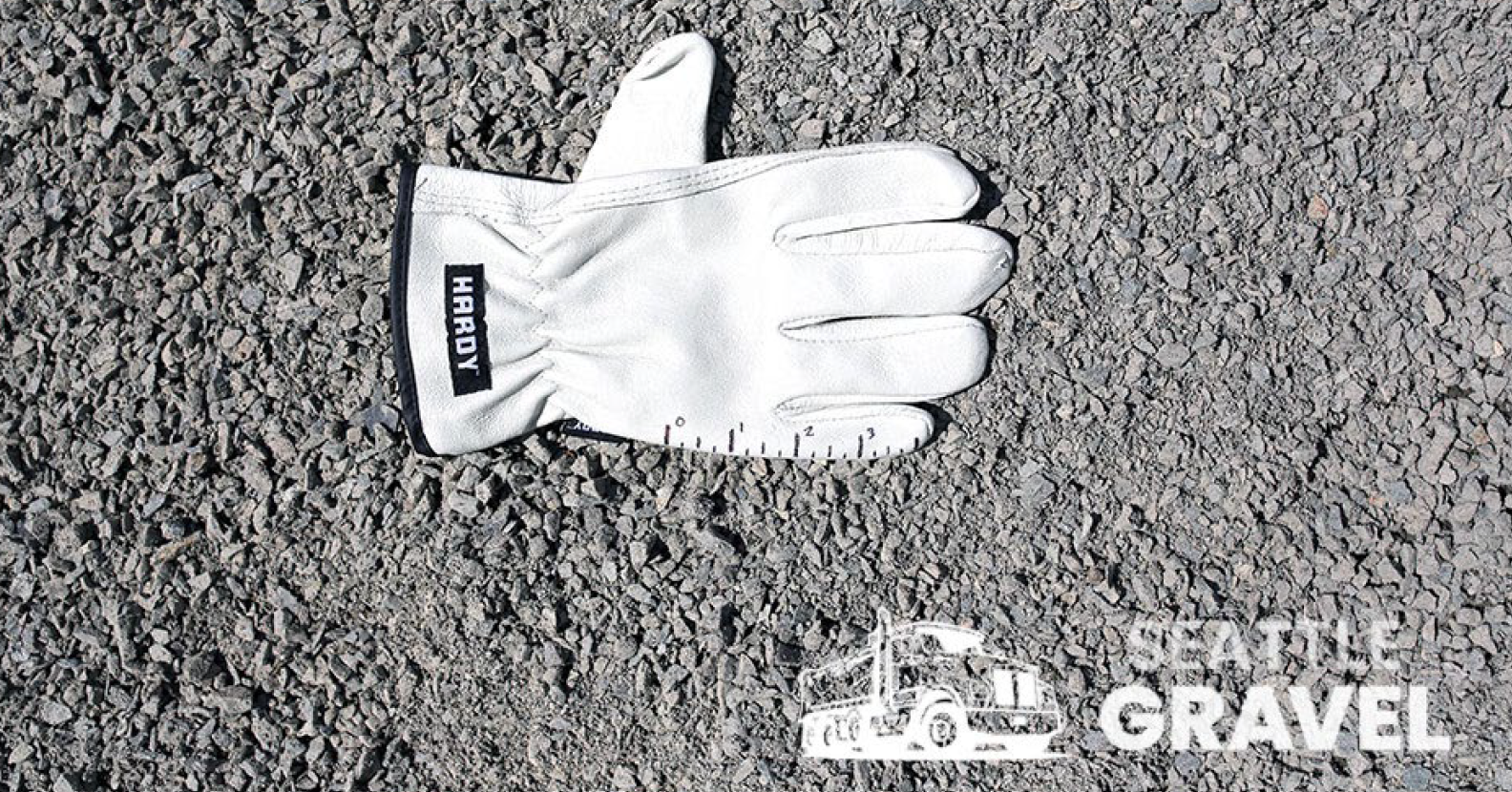
By its simplest definition, “crushed rock” is as basic as it sounds: Rock that has been crushed into smaller pieces. When planning your construction project, it’s important to know what kinds of rocks are ideal for specific applications.
Most crushed rock is produced in quarries.
The main difference between crushed rock “minus” and “clear” (or “clean”) is the presence of fines (small particles of rock and dust). “Minus” rock includes these fines, which help it compact well and form a stable, tight base. “Clean” or “clear” rock has been screened to remove most of the fines, resulting in better drainage and a cleaner appearance, but it doesn’t compact as tightly.
Here’s a more detailed breakdown:
Minus Rock:
• Contains a mix of rock sizes, including fines (small particles and dust).
• Fines help the rock compact and bind together, creating a stable, dense base.
• Examples include 5/8 inch “minus” or 1-1/4 inch “minus” which means all rock sizes up to 5/8 inch or 1-1/4 inch, including the fines.
• Commonly used for driveways, paths, and other areas needing a solid, compactable base.
Clean (or Clear) Rock:
• Has been screened to remove most of the fines, leaving larger, more uniform pieces.
• Offers better drainage because the voids between the larger stones are not filled with fines.
• May not compact as well as minus rock, potentially leaving a looser surface.
• Often used for drainage, as a decorative top layer, or in areas where drainage is a priority.